

How Is the Vehicle ECU Test Done? What Should Be Considered When Performing the Vehicle ECU Test?
Today's commercial world evolves with technology, and evolving sectors bring new requirements — including testing vehicle ECUs (also known as engine control units or motor control units) to verify they are functional: the vehicle ECU test.
Before how the vehicle ECU test is done and what to consider during vehicle ECU testing, let us look at what is ECU? and what does ECU do?
What is ECU? What does ECU do?
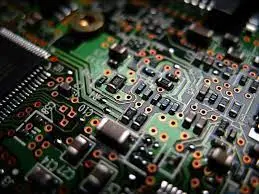
ECU — the vehicle ECU — is an electronic control unit designed so that many actuators in the vehicle work uniformly and deliver optimum performance. ECU consists of a PCB and components mounted on it (spare components are needed for ECU repair after testing).
Engine electrical systems consist of control units designed to manage all vehicle systems, wiring for communication between them, and the battery. Modern vehicles rely heavily on electronics; mechanical systems are increasingly managed by control units. The best known is the ECU (Engine Control Unit).
Like any electronic part, ECUs can fail; testing them is therefore very important. We now turn to how the vehicle ECU test is done and what to consider when performing vehicle ECU testing.
How is the vehicle ECU test done?
Before ECU testing, consider fault symptoms and causes.
Electronic control units are small boards with chips, resistors, capacitors and integrated circuits. The vehicle ECU uses sensor data to keep the engine at optimum performance.
What are ECU fault symptoms and why does the vehicle ECU fail?
The first sign is often the fault light on the instrument cluster, but that does not always mean the ECU itself is faulty. Without a vehicle ECU test you cannot tell whether the fault is in the sensor or the control unit. If the light stays on despite a good sensor, the ECU is likely faulty. Uneven running is another symptom. Stalling without ignition problems may indicate ECU failure. Visible oxidation, burning or burnt smell on the board also suggests ECU failure — then ECU testing should be performed.
Reasons why the vehicle ECU fails:
Water ingress, physical impact, voltage irregularities, incorrect battery jump-start connection, overheating and similar causes.
What should be considered when performing vehicle ECU testing?
Various methods exist. The oldest is checking each component and trace manually — this rarely gives a complete ECU test and a moment of inattention can miss the fault. You then need to fit the ECU to the vehicle to verify, which wastes time. Ecutest devices designed for this work are recommended for time, cost and certainty.
How is desktop ECU testing done? Which devices should I use?
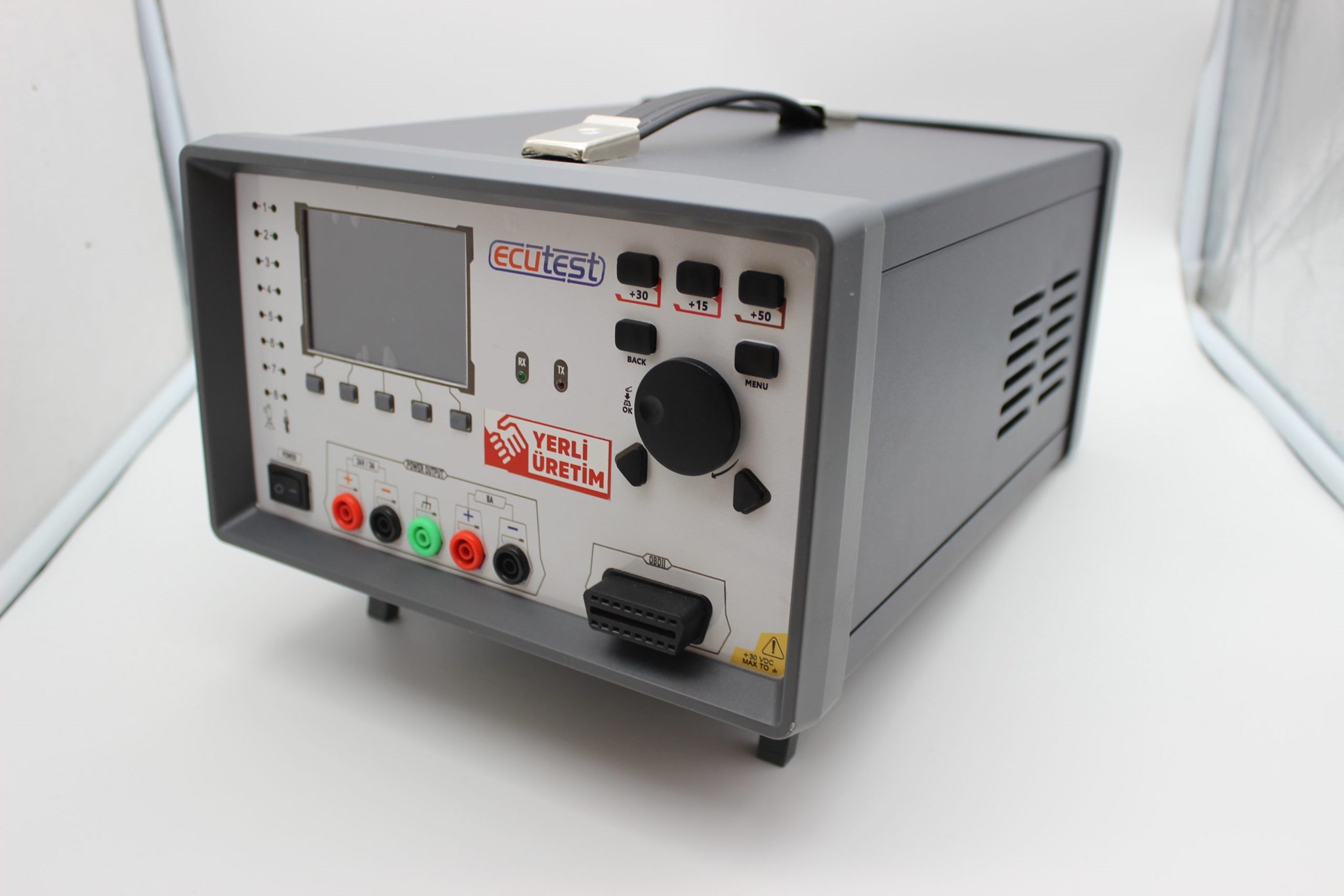
Desktop ECU testing can be attempted manually with oscilloscope, signal generator and multimeter, but that is incomplete. You need a device that simulates vehicle signals. With such a device, all inputs to the engine control unit are simulated, responses analysed and the fault localised — the vehicle ECU test is complete.
Which devices should I use for desktop vehicle ECU testing?
For desktop vehicle ECU testing you should use the Ecutest KF-1500, designed by specialist engineers, produced domestically and CE certified worldwide.
With Ecutest you can test the vehicle ECU on the bench before and after repair and avoid repeated fit-test-remove cycles.
How do you become a vehicle electronics expert? Is there an ECU expert course?
Becoming a vehicle electronics expert takes time; training from experienced practitioners accelerates learning. Purchase Ecutest KF-1500 and take training from our expert team.
With more than ten years of experience, specialist engineers and advanced technology, Nitro Mekatronik is the leading organisation to help you become a vehicle electronics expert.
Vehicle ECU expert courses are delivered by our specialist team with hands-on practice — you see faults directly and even intervene yourself.
For information on ECU repair courses click here.
To View Similar Products Click Here
Author: Mehmet
Related Products

Ecutest Bosch EDC16C34 ECU Socket

Ecutest Continental Simos PCR2.1 ECU Socket

Ecutest Magnetti Marelli Mjd6F3 ECU Socket
You May Also Like

How Is ECU Programming Done?

