

What Is a Dyno (Dynamometer) Test and What Is It For?
You decided to buy a car and found one that fits your needs.
Did you think about running a dyno test before buying, or do you know what a dynamometer actually is?
A dyno test is a procedure that lets you see a vehicle's full data profile, technical details, and equipment information.
It is performed with computerized dynamometer equipment. The test measures engine performance, how much of that performance reaches the drivetrain, and power losses along the way.
Engine performance testing and related checks are central to appraisal companies and vehicle inspections.
One of the most capable products on the market is Magicmotorsport dynoMAG, the professional device used during this process. DynoMag is a technology leader in performance measurement and analysis. You can test dyno effects on a vehicle simply and reliably.
It is also essential equipment for chip tuning professionals.
- Measures more than 600 PS per axle with maximum production quality.
- Ships with software tailored to your workshop needs.
- Designed with a ventilation system.
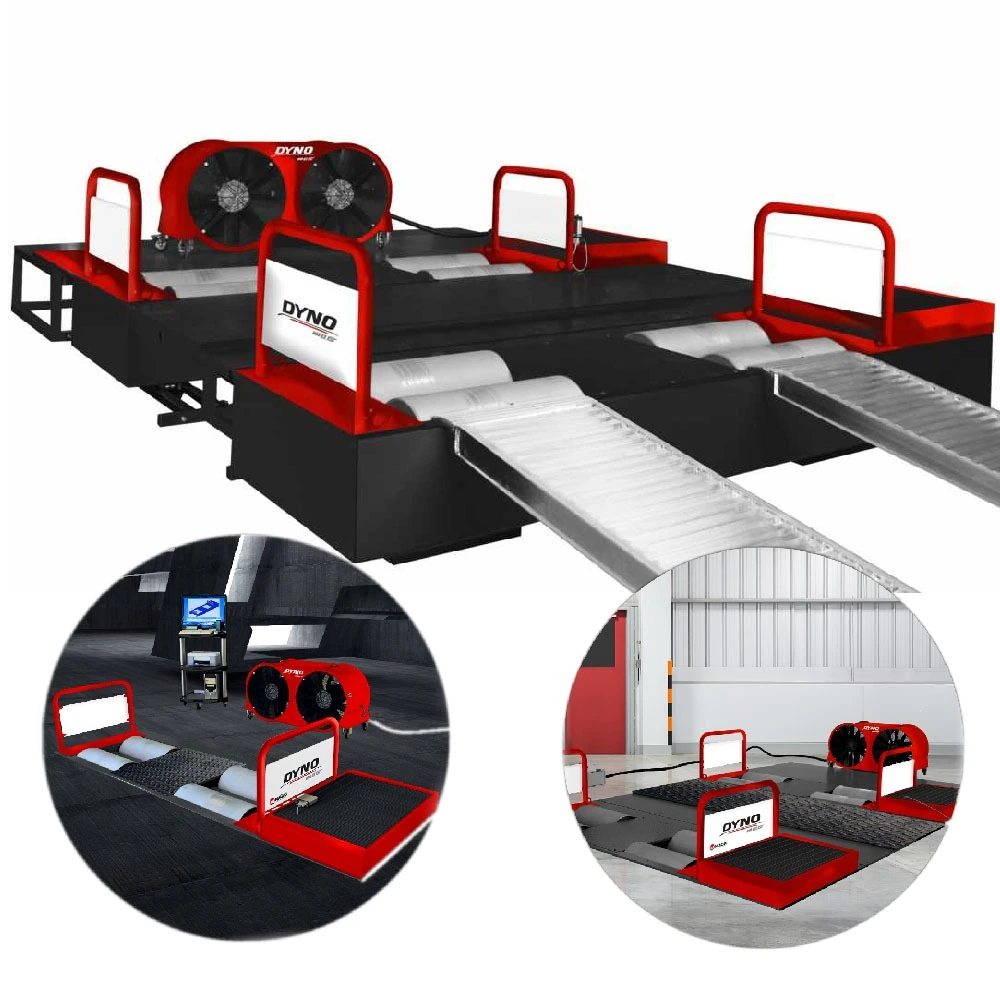
How Is a Dyno Test Performed?
The vehicle's tires are gripped in both directions on the dyno rollers, and measurement is performed by computer as force is applied to the roller assembly.
Engine performance and the power delivered to the wheels are monitored in real time.
First, the vehicle's drivetrain is checked.
The drive layout is identified — front-wheel drive, rear-wheel drive, or all-wheel drive.
The vehicle is then placed on the dyno so the tires sit on the rollers.
An airflow device is mounted at the front to simulate road airflow and help cool the engine under full load.
Straps secure the vehicle on all four sides so it cannot move during the test, when speeds can reach 200–250 km/h equivalent.
A trained operator starts the engine and begins recording all data to the software as soon as the ignition is turned on.
At the end of the test, you receive measurements for engine performance graphs, torque, power, acceleration, horsepower, resistance values, drivetrain components, and power losses.
For detailed information, please call us;
0850 755 02 30
Related Products

Magicmotorsport Flk49 Power Adapter - Power Power Adapter

Magicmotorsport Flex Boot Glitch SW Package - Slave

Magicmotorsport Flex ECU Programming & Chiptuning Tool (Interface)
You May Also Like

Flex v8.12.0.0: BMW & Mini Bosch MDG1 Now in Bench

