

NEW-GENERATION STEERING SYSTEMS — HYDRAULIC STEERING REPAIR
As technology has advanced, new hydraulic steering systems have replaced older steering designs.
On nearly all vehicles produced today, this feature has become a standard.
Hydraulic steering is a system designed to provide assistance so you can travel comfortably when parking in tight spaces and on winding roads where the steering wheel needs to be turned frequently and effectively.
For this reason, driving vehicles with hydraulic steering does not tire the driver and helps prevent accidents.
WHAT IS HYDRAULIC STEERING?
As with older steering systems, when you turn the steering wheel left or right in hydraulic steering, the steering wheel rotates through the effect of oil pumped by a pump.
Because this system uses a hydraulic system instead of mechanical components, it offers a lighter turning effort than conventional steering.
WHAT ARE THE COMPONENTS OF HYDRAULIC STEERING?
- Steering wheel
- Steering shaft
- Steering gear box
- Steering damper
- Control arm
- Tie rods and tie rod ends
- Steering hydraulic pump
- Steering universal joint
- Idler arm
WHAT ARE THE BENEFITS OF THE HYDRAULIC STEERING SYSTEM?
- Minimizes the energy the driver uses to turn the steering wheel.
- Allows a greater turning angle during maneuvers with less steering wheel movement.
- Prevents the steering from becoming heavy and loss of control when a tire blows out.
- Provides maneuverability in short and narrow spaces, making parking easier
WHAT ARE HYDRAULIC STEERING FAULTS?
Almost all of the parts listed in the steering system components section above can fail.
However, in general terms, the parts that fail most often are the steering gear box and steering pump. Because these parts are used continuously within the system, they are more prone to wear and damage.
Of these two components, the steering gear box fails most frequently. This part can be repaired, but the likelihood of the fault recurring over time is high.
WHAT SHOULD YOU DO TO AVOID STEERING FAULTS?
- Turning the steering wheel while the vehicle is stationary damages tie rods and tie rod ends, so do not turn the steering wheel when the vehicle is not moving.
- Check your steering hydraulic fluid frequently. Moving parts generally running dry disrupts system operation and can damage the system.
- Shock absorbers should be maintained regularly and replaced when necessary.
- When turning the steering wheel fully, do not turn it all the way to the end stop. In such cases, the steering oil pump is overworked, which increases the likelihood of failure.
How is hydraulic steering repaired?
First, fault diagnosis must be carried out to identify the failed part. Depending on the result, faulty hydraulic steering parts should be replaced with new ones or repaired.
How is hydraulic steering fault diagnosis performed?
Faults in hydraulic steering are found by testing all system components one by one with a steering test device.
Therefore, professional steering overhaul centers and repair specialists must use proven equipment in this field.

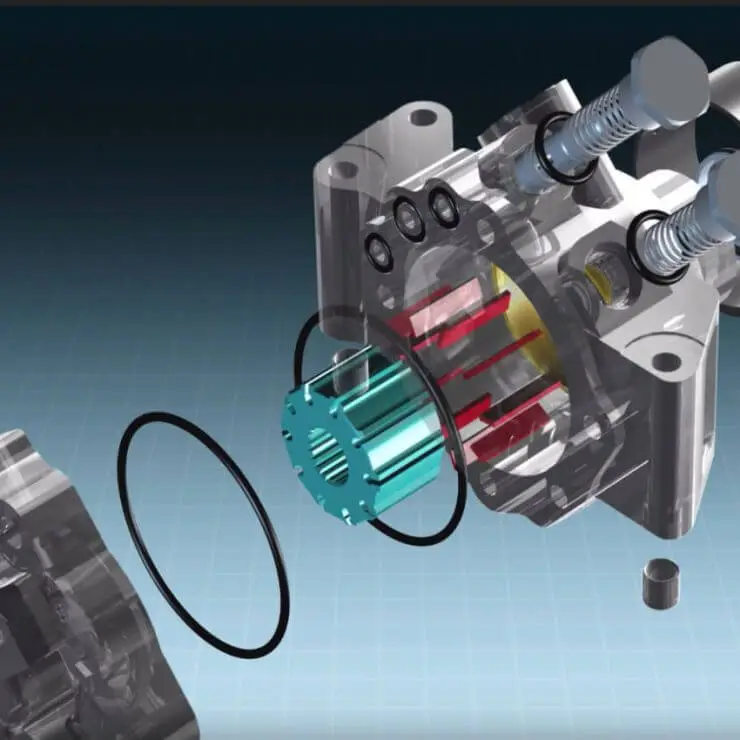
WHAT IS AN ELECTRIC STEERING SYSTEM?
In fact, the electric steering system is a more advanced version of the system that can also include hydraulic steering assistance.
This system has become quite widespread today.
The biggest factors behind the spread of electric steering are lower fuel consumption and lower parts and maintenance costs.
In addition, this system has many other advantages. In the automotive sector, all manufacturers are producing new-generation vehicles under the headings of "efficiency" and "environmental friendliness"; electric steering is one result of these goals. They use lighter equipment that minimizes power loss from the engine (which means lower fuel consumption) and takes up less space.
Electric Steering System Types
- Electrohydraulic Steering System (uses an electric hydraulic pump instead of a mechanical hydraulic pump)
2. Electromechanical Steering System (Electric Servo Steering and Servotronic Steering)
- Electric motor that turns the steering shaft (the electric motor turns the steering shaft)
- Dual-pinion electromechanical steering (the electric motor moves the rack directly)
- Electric Steering (Steer by wire: steer-by-wire. Electronic driving without a mechanical connection. Not yet widely used)
If we rank them in terms of fuel economy and technology used;
Hydraulic steering system: high fuel consumption, speed-sensitive steering difficult to implement, no automatic parking.
Electrohydraulic steering system: lower fuel consumption than hydraulic steering, speed-sensitive steering easier to implement, no automatic parking system.
Electric steering: lowest fuel consumption, speed-sensitive steering and automatic parking system can be implemented.
Steering systems widely used in new-generation vehicles are the electrohydraulic steering system and the electric steering system.
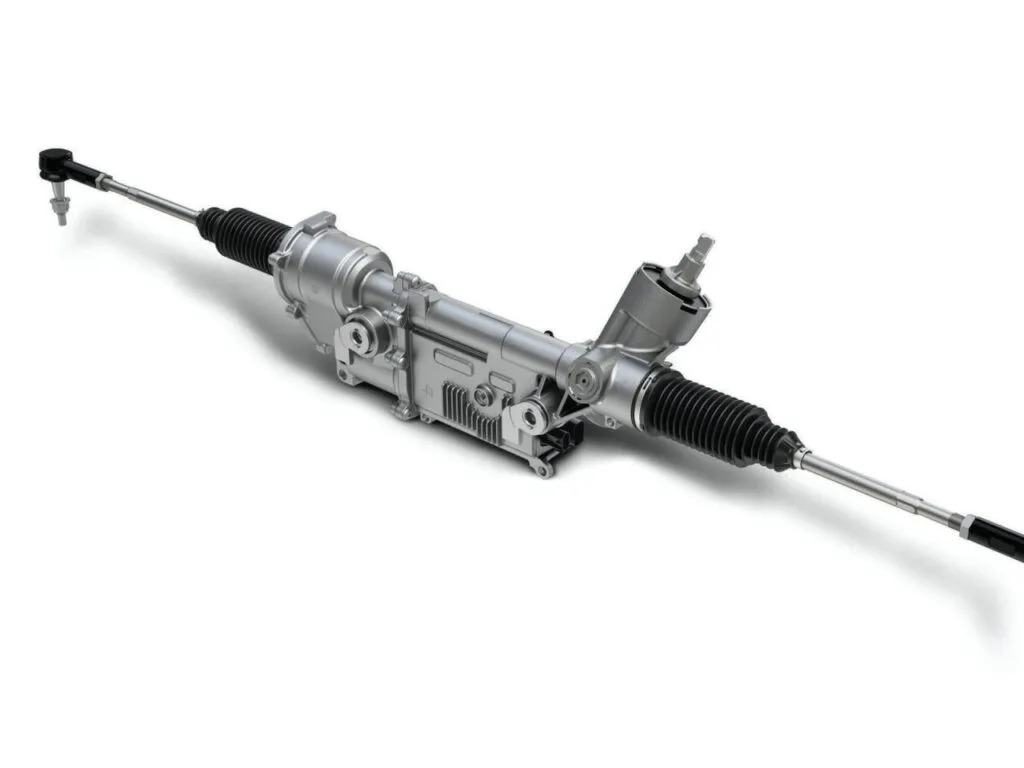
Electric Steering System Features and Structure
In this system, an electric motor assists the driver's steering effort by increasing the torque on the steering shaft, so the steering can be controlled more smoothly and comfortably in the moments when steering is hardest and turning is greatest — such as when stationary, driving slowly, parking, and maneuvering. As wheel (tire) rotation speed decreases, resistance during steering increases; in other words, additional (servo) power is needed more.
As load increases and speed decreases, friction resistance increases; steering the wheels becomes harder, so additional power is needed to keep the steering light.
In electromechanical steering, the steering is stiffened as vehicle speed increases; this improves driving safety at high speeds. As wheel (tire) rotation speed increases, friction resistance during steering control decreases; in other words, additional (servo) power is no longer required.
Thanks to this developed system, the electric steering system does not need additional equipment to adjust steering stiffness, whereas the hydraulic system does.
In electromechanical steering, hydraulic equipment has been completely eliminated.
Because there is no hydraulic pump in the electromechanical steering system, it does not draw engine power; it uses electric current only when the steering is turned. This saves fuel.
Thanks to electromechanical steering, automatic parking (park assist) has become possible.
Under the command of the steering electronic control unit (steering ECU), the steering can turn by itself and the vehicle can park automatically. Automatic parking assistance is not possible on vehicles with hydraulic or electrohydraulic steering because they do not have a steering control unit.
With the development of this steering, lane keeping assist has also become possible.
Similarly, thanks to the unit and sensors that control the steering system, the steering can be intervened in to keep the vehicle in its lane.
After the steering is turned, the electric steering system helps it return to center and straighten on its own.
As in older systems, a torsion bar is used in this system to detect steering maneuver direction and turning force. The torsion bar works together with the steering position sensor and torque sensor.
 Electric Steering System Advantages
- Lower fuel consumption,
- Fewer parts (oil, pump, hose, valve, cylinder, etc.),
- Simpler structure, lighter and more compact,
- Greater comfort and better driving safety
In hydraulic steering, hydraulic pressure is generated by a hydraulic pump that takes its motion from the engine (crankshaft), which places an extra load on the engine and causes more fuel to be burned.
There is no hydraulic pump in electric steering; there is only an electric motor. Therefore, no extra load is placed on the engine.
In hydraulic steering, the hydraulic pump continues to run and draw power from the engine whether or not the steering is turned, increasing fuel consumption; however, the electric motor in electric steering consumes electrical energy only when the steering is turned.
On average, the steering is turned during only 10% of a journey; for 90% of the time, no steering maneuver is needed.
The assist force needed most when the vehicle is stationary or during parking and maneuvering is harder for hydraulic steering to provide, because at that time engine speed — and therefore pump speed — is low, so the system cannot generate sufficiently high hydraulic pressure.
For this reason, the steering may not feel light enough.
Hydraulic steering has many parts.
This means extra weight, more space, and higher cost.
Electric steering means fewer parts, less space, lower cost, and easier maintenance.
In hydraulic steering, new-generation technologies such as automatic parking (park assist) or lane keeping assist cannot be implemented.
Electric Servo Steering — What Does It Mean?
In the automotive sector, "servo" is a term used to mean additional power or additional assistance, based on the principle of achieving greater force with a smaller input.
From the term servo steering, it should be understood that this steering system is equipped with an auxiliary power device (electric or hydraulic). In servo steering, during the process of turning the steering wheel, a power source other than the driver supports the system with additional force.
Therefore, we can call all non-mechanical steering systems servo steering. Servo assistance means applying force in the direction the driver applies force, in addition to the driver's steering effort, with the help of servos.
 Electronic Steering Repair
How Is Electric Steering Repaired?
A few examples of faults caused by the steering gear box;
- Binding or catching when turning the steering wheel left and right
- Increased stiffness in the steering compared to before — self-centering issues
- Steering stiff in one direction only
- Oil leak
- Steering not returning to center and staying turned to one side
- Play in the steering
For more information, please call us;
0850 755 02 30
You May Also Like


